In-Mold Coatings (IMC): Benefits, Process, and Applications
Performix Coatings develops and manufactures flexible, protective paints and coatings for demanding applications. As a recognized leader in custom formulations, we develop advanced in-mold paints and coatings for foam molders/fabricators and component manufacturers across the automotive, medical, home healthcare, sporting goods, and industrial sectors. Learn more about the chemistry behind in-mold paints and coatings, specific processing parameters, and distinct applications below.
If you manage a foam molding facility, you already know that traditional post-molding paint lines are massive production bottlenecks. They eat up valuable floor space, require energy-heavy curing ovens, and demand constant labor and overhead. Our unique formulations bypass these secondary operations entirely by curing the finish simultaneously with the substrate. This chemical integration creates a permanent, highly durable finish right out of the mold.
What Are In-Mold Coatings?
In-mold paints are typically for decoration and aesthetics with some basic protection, whereas coatings are typically engineered for performance and protection, with aesthetics often secondary. They are specialized liquid barrier films applied directly to the interior cavity of a mold before the injection or pouring of the base substrate.
Instead of relying on mechanical adhesion like a standard surface paint, the coating cross-links chemically with the molding material. This reaction typically occurs with polyurethane foam, integral skin foams, or thermoset plastics.
As the liquid substrate expands and cures inside the closed mold, it absorbs the layer of the paint or coating. This reaction forms a monolithic structure. Once the operator opens the press, the part emerges with a fully cured, factory-finished exterior.
We engineer these formulations to meet the specific requirements of the items being manufactured.
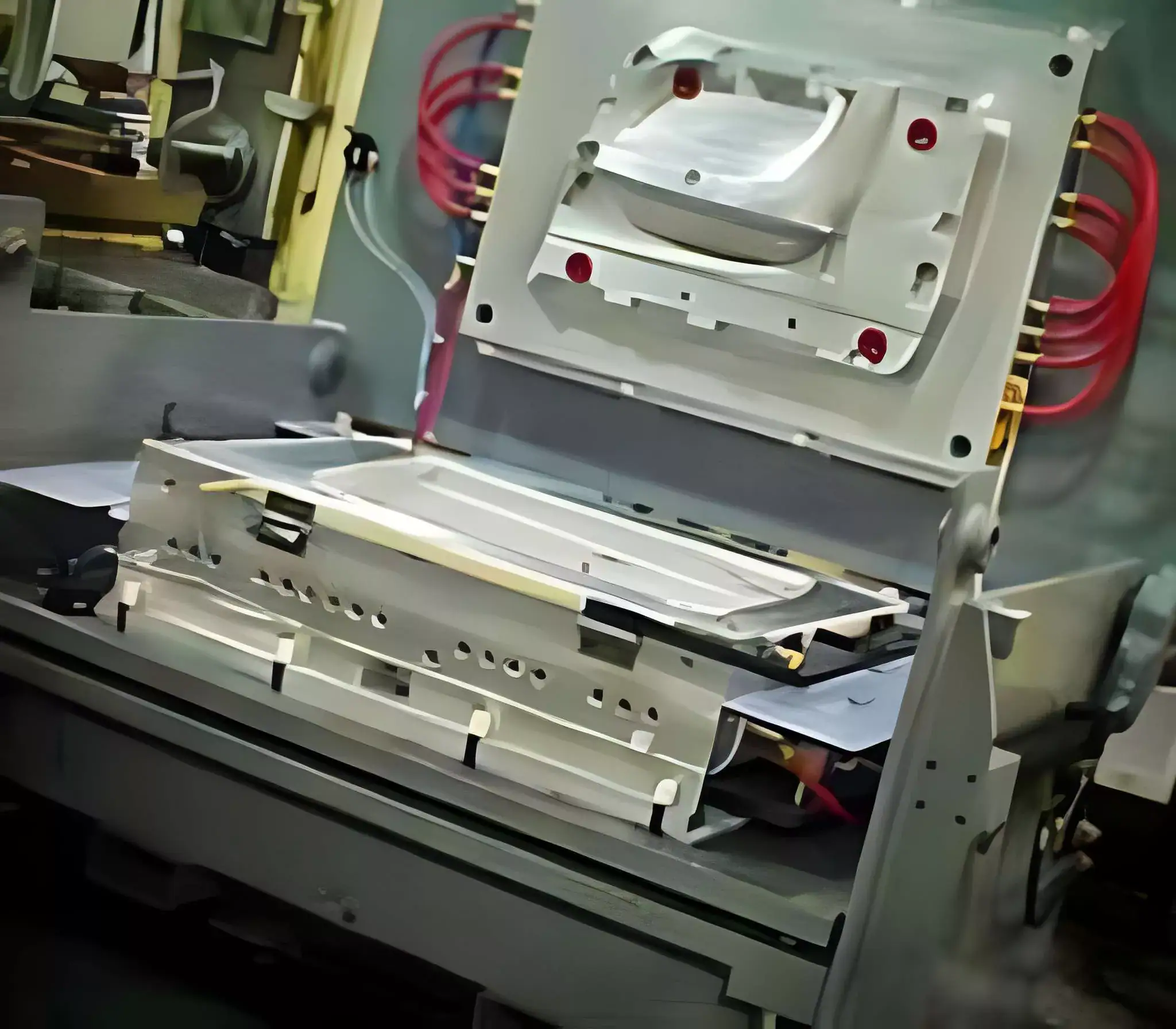
How In-Mold Coatings Work
Before the mold closes, operators prepare the mold, apply paint compatible mold release, and then spray apply the liquid paint or coating directly onto the mold surfaces using conventional or HVLP spray equipment. The moment the coating hits the mold surface, the paint or coating begins to flash off, leaving a uniform, reactive film waiting for the substrate.
Next, the operator dispenses the reactive polyurethane or composite substrate into the cavity. The mold closes. The exothermic heat generated by the curing substrate accelerates the coating’s cross-linking phase. The two distinct materials fuse at the molecular level. Process control relies heavily on strict parameter management.
 Temperature Considerations

Thermal management dictates the success of the chemical bond. The mold temperature directly influences both the flash-off rate and the final cure kinetics.
Low mold temperatures slow down solvent evaporation. This delay traps liquid solvents beneath the expanding foam. The trapped gases eventually rupture, causing surface blisters or microscopic pinholes. Conversely, excessively high temperatures shock the in-mold paint or coating. The material pre-cures before the substrate makes contact. This premature reaction destroys the chemical bond and causes severe delamination in the field.
Our research and development chemists analyze your specific thermal windows. We engineer the resin chemistry to react precisely within your existing temperature parameters. Facilities do not need to retool presses or alter core molding processes to accommodate our liquid formulations.
At Performix, we offer a wide range of resin systems, acrylic, aliphatic polyurethane, EVA, TPU, and hybrids in our paints and coatings. We also offer water-based and solvent-based options, and we pride ourselves on the fact that we have in-mold paints and coatings that are specifically designed to work at temperatures ranging from 70-160°F to address a diverse range of customer-specific molding environments and temperatures.
TEMPERATURE CONSIDERATIONS

IMC Starting Mold Temperature: Product Selection Guide
Select the mold temperature you aim to maintain for this application. Then, review the formula options available for that temperature range to identify the Performix Paint or Coating that best suits your application parameters.
MOLD TEMPERATURE RANGE (°F)
60°F
80°F
100°F
120°F
140°F
160°F
170°F
F-897
F-851S
F-899
F-1053
F-1059
PERFORMIX PRODUCT SERIES
F-897
70°F - 90°F
The industry standard in high-performance aliphatic urethane decorative in-mold paints.
View Product

F-851S
80°F - 110°F
A water-based acrylic barrier coat paint intended for in-mold use, typically top-coated during a post-coat operation or finished with a sewn cover application.
View Product
F-899
100°F - 110°F
An industry-standard high-performance aliphatic urethane decorative paint intended for slightly higher mold temperatures or highly detailed molds where standard in-mold paints may lift and lose definition.
View Product
F-1053
100°F - 120°F
A unique high-performance aliphatic urethane/TPU coating intended for higher mold temperatures and applications requiring greater film performance than standard aliphatic urethane paints typically provide.
View Product
F-1059
115°F - 160°F
A unique TPU/aliphatic urethane coating intended for integral skin applications where maximum durability is required.
View Product
* Temperature ranges indicate recommended starting points. Consult your Performix technical representative to fine-tune settings for your specific process conditions.
Material Handling and Processing

Successfully executing this process requires dialing-in specific fluid dynamics. Our paints and coatings are manufactured at a viscosity that allows the user the ability to adjust their specific spray equipment to ensure the in-mold paints or coatings are applied properly. If the paint or coating is applied too wet, the liquid will pool in low areas and leave vertical walls unprotected. If it is applied too dry, operators will struggle to achieve a uniform mil thickness across complex contours.
We evaluate several handling parameters during the initial formulation phase, including:
- Evaporation rates matched to your target cycle times
- Pigment suspension stability to maintain exact color matching across high-volume batches
- Mold release compatibility to prevent surface defects during demolding
Spray technicians must monitor the mil thickness rigorously. Excessive application weights cause the surface to crack or blister during part flexure. Inadequate film thickness compromises the part’s abrasion resistance and UV stability. We work directly with your production staff to dial in application specifications. We balance efficient coverage with optimal mechanical performance.
Benefits of In-Mold Coatings
Transitioning from secondary painting to an integrated molding strategy transforms a production floor. Manufacturers recognize substantial ROI through process consolidation and enhanced part performance. The benefits of in-mold coatings include:

Enhanced durability and performance
Because the coating and the foam can cross-link chemically, the surface cannot peel, flake, or blister like a traditional paint film. The finish flexes seamlessly with the underlying polyurethane. We incorporate advanced UV stabilizers and impact modifiers directly into the liquid matrix. This chemistry can provide the final part with exceptional resistance to harsh industrial chemicals, continuous friction, and prolonged sunlight exposure.

Elimination of secondary painting operations
Parts exit the press ready for final assembly or packaging. Facilities completely bypass the spray booth. This workflow eliminates the need for drying racks, curing ovens, and the heavy energy consumption associated with post-processing. Plant managers reclaim valuable floor space and reallocate finishing labor to more productive manufacturing cells.

Reduced costs and improved efficiency
Handling a part once instead of three times drastically reduces scrap rates. Quality control inspectors catch potential defects at the press rather than discovering them after the part travels through multiple downstream departments. Furthermore, eliminating the secondary paint line removes a major source of VOC emissions from the general plant environment. Cycle times shrink, output increases, and the overall cost per unit drops significantly.
Applications of In-Mold Coatings

Automotive Components
The transportation sector demands materials that survive continuous human contact and extreme temperature variations. Automotive suppliers use these specialized finishes for steering wheels, interior armrests, heavy-duty grab handles, doors, and dashboard panels. The technology can produce a premium soft-touch feel while resisting severe degradation from skin oils, cosmetics, and UV radiation.
Under the hood, components face severe thermal cycling and fluid exposure. We engineer robust barrier films for acoustic engine covers, HVAC ducting, and vibration-dampening foam inserts. These parts must survive proximity to exhaust heat and hydraulic fluids without breaking down structurally.


Industrial and Equipment Parts
Heavy machinery requires virtually indestructible seating and touchpoints. Agricultural tractors, construction excavators, and marine vessels utilize our formulations to protect exposed foam cushions. These surfaces must withstand torrential rain, abrasive dirt, and heavy physical impact. Standard vinyl upholstery tears easily under these conditions. Standard paint simply cracks.

Why Choose Performix Coatings for In-Mold Paints and Coatings
Performix manufactures the widest range of protective paints and coatings anywhere. We know that forcing a generic, off-the-shelf paint or coating into a molding operation usually ends in costly rejects or stalled production. Instead, our chemists collaborate directly with your process engineers and production staff to ensure satisfactory results.
We tailor the formulation chemistry to respect your exact substrate material, your preferred mold releases, and your aggressive cycle times. Our development process relies on rigorous, iterative testing:

Lab-scale trials validate physical and aesthetic and color performance.

Pilot production runs verify coating behavior under actual thermal conditions on your floor.

Full-scale qualification confirms batch consistency and strict regulatory compliance.

Ongoing technical support addresses process changes and rapid troubleshooting needs.
We manufacture coatings in controlled environments with complete lot traceability and quality documentation. We supply technical data sheets, safety data sheets, and comprehensive application guidelines to support your production planning.
Transitioning to an integrated coating process requires precise chemistry and expert technical support. Contact us to discuss your exact production parameters. You can also request a quote to initiate a custom formulation project tailored to your facility.